
Ventilation Without Drafts: A Tiny-Home Primer
 Kaushik Kyada
June 15, 2026
8 min read
Kaushik Kyada
June 15, 2026
8 min read

Build a tiny home well and you build a nearly airtight box. That is the goal, because a tight shell is what makes a small space cheap to heat and cool. It also means the box cannot clear its own air. Every shower, every pot of rice, and every night of two people breathing adds moisture and pollutants that a leakier house used to shed through its gaps. A sealed home stays healthy only when you give it a deliberate way to breathe, and doing that without turning the living room into a wind tunnel is the piece of small-home design almost no one explains clearly.
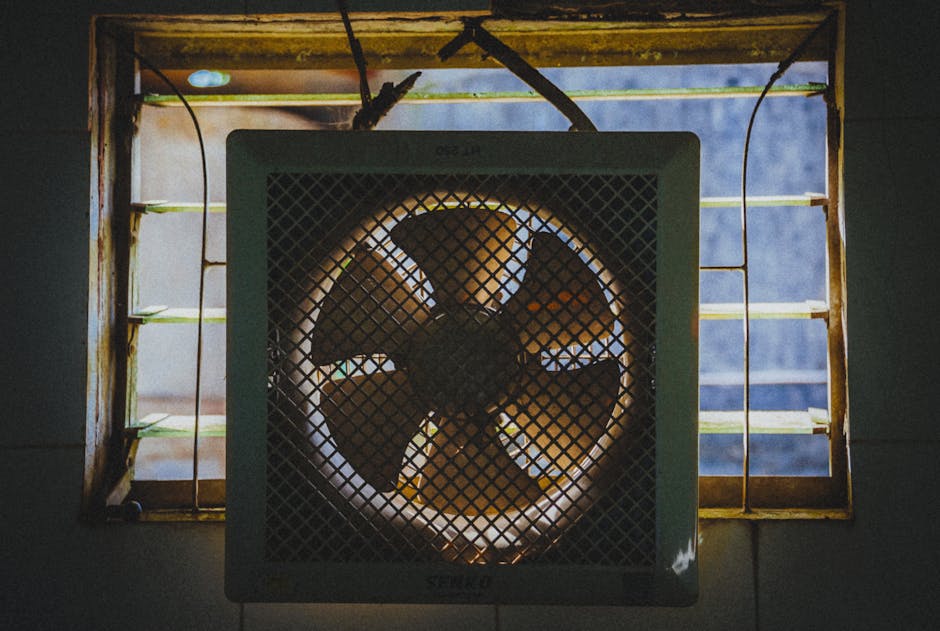
The good news: the whole problem comes down to a handful of numbers and two or three pieces of equipment. Get them wrong and you either leave stale, damp air in the room or push so much cold air inside that you feel it on your neck. This primer covers the numbers, the hardware, a worked example, and what to do when the air still feels off.
Why a tight small home needs this more than a big one
Indoor air is usually dirtier than the air outside, and a small volume concentrates the problem. In its long-running Total Exposure Assessment Methodology studies, the EPA found that levels of about a dozen common organic pollutants ran 2 to 5 times higher indoors than outdoors, in homes of every kind and location. Those pollutants come from ordinary things: finishes, cleaners, adhesives, and combustion. In a compact home the sources sit closer together and there is far less air to dilute them, so an activity a large house barely registers can pull a tiny home’s air quality down within an hour.
Moisture is the other half of the story. Two people asleep release close to a pint of water into the air overnight, and showering and cooking add more. A leaky house disperses it; a tight small home collects it on the coldest surfaces, usually windows and the corners behind furniture, where it feeds mold. Ventilation carries both the pollutants and the water vapor outside before either causes trouble.
The one number that sizes your whole-house system
Start with the continuous ventilation rate. The residential ventilation standard, ASHRAE Standard 62.2 (2013), sets a whole-house rate of 3 cfm per 100 sq ft + 7.5 cfm/person, a meaningful step up from the 1 cfm per 100 square feet the 2003 through 2010 versions asked for. CFM is cubic feet per minute. The formula has two parts on purpose: the floor-area term covers pollutants the house itself gives off, and the per-person term covers what the occupants generate, including carbon dioxide.
Run the math for your own plan before you shop. For a two-person home it usually lands between 18 and 30 CFM. That is a steady trickle, not a gale, and drafts almost never come from this target rate. They come from delivering the air in the wrong place, at the wrong temperature, or in loud bursts instead of a steady flow.
Exhaust-only versus balanced, and why balance kills the draft
There are two honest ways to ventilate a small home. The cheaper one is exhaust-only: a quiet fan pulls stale air out, and fresh air sneaks back in through trickle vents and whatever small leaks remain. It works, but every cubic foot pulled out is replaced by unconditioned outdoor air drawn in wherever the house is leakiest, cold and undistributed in winter. That is the classic tiny-home draft.
The better answer in a cold or windy climate is balanced ventilation, where a device pushes the same amount of fresh air in as it pulls stale air out and passes the two streams through a heat exchanger. The outgoing warm air pre-warms the incoming cold air, so the fresh supply arrives close to room temperature: the full ventilation rate with almost none of the chill. That is the trick to ventilation without drafts.
The bathroom fan is a code minimum, not a strategy
Local exhaust is separate from your whole-house rate, and it is not optional. The 2024 International Residential Code (Section R303.3) requires a bathroom or toilet room to have local exhaust of at least 50 CFM intermittent / 20 CFM continuous, ducted straight outdoors rather than into a wall cavity or the floor. That fan clears the burst of moisture a shower produces, which the gentle whole-house system cannot handle on its own.
Choose the fan for efficiency and silence, because in a small home you hear everything. The Panasonic WhisperGreen Select (model FV-0511VKS2) uses an ECM motor that reaches roughly 16.7 CFM/watt at 70 CFM and runs below 0.3 sones on its low setting, quiet enough that you have to look to tell it is on, and it meets ENERGY STAR requirements. A fan like this can double as your continuous whole-house exhaust on low and ramp up on a timer or humidity sensor when someone showers.
Balanced ventilation without a duct network
Running rigid ductwork through a 200-square-foot home wastes space and money, which is why ductless heat-recovery ventilators have become the default in serious tiny homes. The Lunos e2 is the common choice: a pair of through-wall units with ceramic cores that alternate about every seventy seconds, one pushing warm stale air out while the other draws cold fresh air in through the warmed core, then they reverse.
The numbers are what make it work in a small space. The Lunos e2 is rated at 88% heat recovery efficiency (tested to DIBT and DIN V 4701 at about 15 CFM) while drawing only about 0.25 watts per CFM, and it delivers air in steps of 10, 15, 20, and 22 CFM. Recovering most of the heat is what takes the chill out of incoming winter air, and the tiny power draw lets it run continuously, as intended.
A worked example: a 240-square-foot cabin for two
Put the numbers together. Take a 240-square-foot cabin with two full-time occupants:
- Floor-area term: 240 square feet is 2.4 hundreds, and 2.4 x 3 CFM gives 7.2 CFM.
- Occupant term: two people x 7.5 CFM gives 15 CFM.
- Whole-house target: 7.2 plus 15, which is about 22 CFM of continuous fresh air.
That 22 CFM lands right on the Lunos e2’s top step, so a single paired kit at its highest speed covers the whole-house need while recovering most of the heat and drawing only a handful of watts. Add one WhisperGreen fan in the bathroom for the shower bursts, wired to a humidity sensor so it ramps up only when needed. The home then breathes at the rate the standard asks for, the incoming air arrives near room temperature, and nobody feels a draft.
Size the whole-house rate for a steady trickle and the local exhaust for the burst. Two jobs, two devices, no drafts.
What to do when the air still feels wrong
Even a correctly sized system can misbehave, and the symptom usually points straight at the cause. Work through these before blaming the equipment:
- Condensation on the windows: the whole-house rate is too low, or the unit is switched off. Confirm it is running and raise it a step before winter.
- A cold stream you can feel: almost always exhaust-only pulling raw outdoor air through a leak, or a heat-recovery unit mounted too close to a seat or bed. Move the seating or add balanced supply.
- Bathroom mirror still dripping: the local fan is undersized, on too short a timer, or ducted into a cavity instead of outdoors. Check the duct run first, since a crushed or disconnected duct is the most common culprit.
- Stale air despite a running fan: supply and exhaust are short-circuiting, sitting so close that the same air just loops between them. Separate the intake and exhaust points.
One habit prevents most of these: clean or replace the filters and wipe the cores a couple of times a year. A clogged core quietly loses both airflow and heat recovery, and it is the first thing to check when a system that used to work stops keeping up.
Frequently asked questions
Do I really need mechanical ventilation, or can I just crack a window?
An open window ventilates only while you remember to open it and only when the weather makes it bearable, a small fraction of the year in any harsh climate. It gives you no control over the rate and recovers none of your heating or cooling. A window is a fine supplement in mild weather, not a substitute for a system that runs at a known rate year round.
Will running a ventilator all winter waste the heat I paid for?
That is exactly the problem a heat-recovery ventilator solves. Because a unit like the Lunos e2 hands most of the outgoing air’s warmth to the incoming stream, you keep the large majority of that heat while still swapping the air, and the fan draws only a few watts. The penalty is small, and far cheaper than the mold repair stagnant, damp air eventually forces.
Can one bathroom fan do the whole job in a really small home?
It can serve as exhaust-only whole-house ventilation if you run an efficient, quiet model continuously on low and let fresh air enter through trickle vents. That is a legitimate budget approach. The tradeoff is that the replacement air arrives cold and undistributed in winter, which is the draft you are trying to avoid. In a cold climate, spend the extra on a balanced heat-recovery unit and keep the bathroom fan for the shower bursts.
Kaushik Kyada
Keep reading
Compact Laundry Setups That Actually Work
A clear-eyed comparison of portable washers, all-in-one units, and gentle line-drying for small homes.

Small-Home Water Saving That Actually Adds Up
The handful of changes that meaningfully cut a small home’s water bill, ranked by effort and effect, without the moralizing.

Solar Basics for People Who Don’t Want to Become Engineers
A clear, unhurried overview of how home solar works in small spaces, panels, controllers, batteries and the realities of small-system design.