
Backup Water Storage Without an Industrial Setup
 Kaushik Kyada
July 17, 2026
7 min read
Kaushik Kyada
July 17, 2026
7 min read

A few gallons of clean water, set aside before you ever need them, is the difference between a calm outage and a scramble to the store alongside everyone else who waited. Storing water at tiny-home scale is not an industrial project. It is a shelf, a handful of containers, and a habit you refresh twice a year. The setup is small, the maintenance is minor, and the peace of mind is worth far more than the space it costs you.
How much water a tiny home should actually keep
Start with a number instead of a vibe. Emergency planners recommend 1 gallon of water per person per day, with a three-day supply as the minimum. That gallon covers drinking plus a little for basic hygiene and food prep. A three-day store for a two-person household is 6 gallons. If you want a genuine cushion, a two-week reserve works out to 14 gallons per person, or 28 gallons for that same couple.
For a tiny home, the honest target sits between those two. Three days is the floor, and it fits almost anywhere. Two weeks is the comfortable ceiling for people in areas prone to storms, wildfire, or long rural outages. Do not forget pets: add roughly a quart per day for a cat and up to a gallon a day for a large dog. Write your household total on a sticky note and size your containers to hit it, rather than buying jugs at random and hoping it adds up.
Containers that fit a small footprint
The container problem is really a shape problem. You have vertical slivers, under-bench voids, and a bit of loft edge, not a garage. A mix of sizes beats one big drum:
- Store-bought 1-gallon jugs of drinking water. Cheap, stackable, pre-sealed, and easy to grab and carry. Good for the first three days of supply.
- Rigid water bricks or jerry cans, 3.5 to 7 gallons each. These stack like blocks, slide under a bench seat, and still lift without wrecking your back.
- A single 15 to 30-gallon barrel if you have a corner to spare. It carries the bulk of a two-week reserve, though you will want a pump or spigot to draw from it.
- Collapsible jugs and a folding 5-gallon bag that store flat until an alert, then fill from the tap before pressure drops.
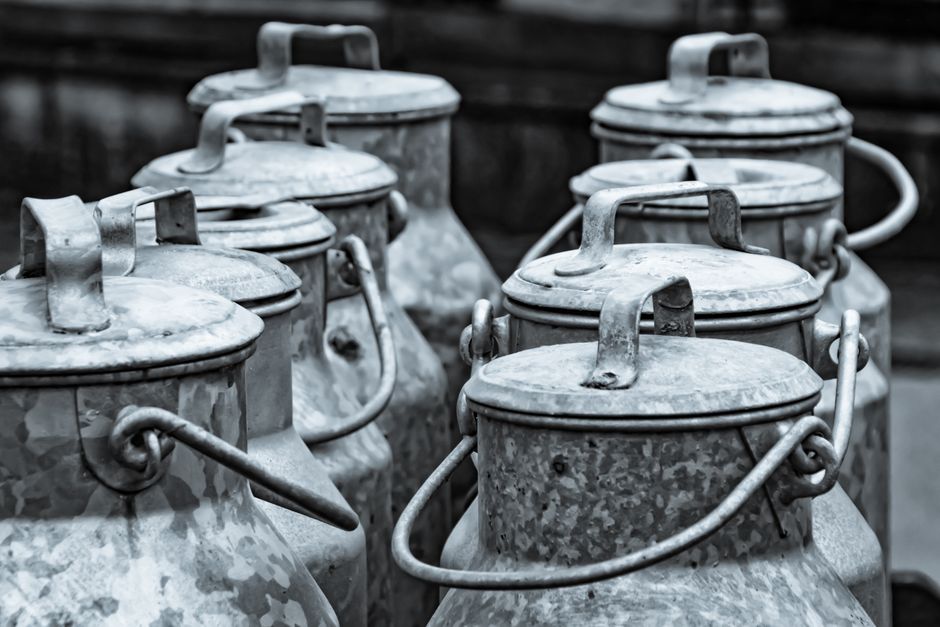
Use food-grade containers rated for water, keep them out of direct sun, and never store water in old milk jugs. Milk residue and the thin plastic both invite bacteria. Label every container with the date you filled it.
Keeping stored water drinkable
Municipal tap water that is already treated does not need anything added when you store it. Fill clean containers, cap them tight, and rotate the supply about every six months. Set a recurring reminder so it stays a two-minute chore, not a forgotten science experiment.
If you are ever unsure whether water is safe, treat it before you drink it. The simplest method is heat: the EPA advises bringing questionable water to a rolling boil for at least one minute, or three minutes at elevations above 5,000 feet. When boiling is not possible, plain unscented household bleach works. The EPA guidance is 8 drops of 6% bleach per gallon (or 6 drops if your bleach is 8.25%), stirred in and left to stand for 30 minutes. If the water still has no faint chlorine smell after that, repeat the dose once and wait another 15 minutes.
Boiling handles germs but not chemical pollutants, and bleach handles most bacteria and viruses but not heavy metals. Neither turns floodwater or pool water into drinking water. For those, filter and treat, or do not drink it at all.
Topping up from the roof
A tiny home has one quiet advantage for backup water: the roof is small enough to reason about, and it produces more than people expect. A useful rule of thumb is that one inch of rain deposits 0.623 gallons per square foot of roof, so a 1,000-square-foot roof yields about 600 gallons per inch. Most tiny homes have far less roof than that, but the math scales cleanly: a 300-square-foot roof still hands you roughly 180 gallons from a single inch of rain.
Catching it does not take much. A downspout diverter, a leaf screen, and a barrel are the whole kit. A typical wood or plastic rain barrel holds roughly 40 to 80 gallons per barrel, and even a half inch of rain on a 1,000-square-foot roof produces about 300 gallons, which means a single barrel fills fast and then overflows. Keep this water clearly marked as non-potable unless you filter and disinfect it. For backup use it is ideal for flushing, washing, and cleaning, which frees your sealed drinking store for drinking.
A two-day winter outage, step by step
Picture a January ice storm that drops the grid for 48 hours. Two adults, one dog. Your drinking need is 2 gallons a day for the people plus about a gallon for the dog, so 6 gallons covers both days with margin. That is six 1-gallon jugs off the shelf, untouched and uncomplicated. For flushing and hand-washing you draw from the rain barrel you filled in autumn, so the drinking jugs never get spent on chores.
The winter twist is freezing. Water expands as it freezes and can split a rigid container, and a solid block of ice is useless when you are thirsty. Keep your primary drinking store inside the heated envelope of the home. For an outdoor barrel or a stock tank you want to protect, a submersible de-icer keeps it liquid, but budget for the draw: a common stock-tank de-icer pulls about 1,000 watts. On a small battery or generator that is a heavy, continuous load, so during an outage it is usually smarter to bring a few days of water indoors and let the outdoor tank freeze than to spend precious watts keeping it thawed.
What to do when it goes wrong
Stored-water setups fail in a few predictable ways, and each has a quick fix:
- The water tastes flat or stale. This is normal after months in a sealed container and it is not a safety problem. Pour it back and forth between two clean containers a few times to reintroduce air, and the taste returns.
- You find algae, film, or a smell. Discard it, scrub the container with a mild bleach solution, rinse well, and refill. Then move that container out of any light that was feeding the growth.
- A container leaks or freezes and cracks. This is exactly why you spread supply across several vessels instead of one drum. Retire the cracked one and your reserve survives.
- You run low mid-outage. Switch to your non-potable barrel for all washing and flushing immediately, ration the sealed drinking store, and treat any additional water by boiling or bleach before you drink it.
The through line is redundancy and rotation. Several containers, refreshed on a calendar, treated when in doubt. Nothing here needs a pump house or a pressure tank. It needs a shelf and about twenty minutes twice a year.
Frequently asked questions
How long can I keep stored tap water before it goes bad?
Treated municipal water in a clean, sealed, food-grade container stays safe more or less indefinitely, but taste and container integrity degrade over time. Rotating every six months keeps it fresh and gives you a reason to inspect the containers. Commercially bottled water carries a best-by date, which reflects quality rather than a hard safety cliff, so rotate that on a similar schedule.
Do I need special containers, or will any jug do?
Use containers made and rated for water or food, such as store-bought water jugs, water bricks, or food-grade barrels. Avoid reusing milk or juice containers, because sugar and protein residue feed bacteria and the thin plastic breaks down. If you repurpose a container, it should be one that held a food product, cleaned thoroughly, and it should never have held anything toxic.
Is rainwater from my roof safe to drink in an emergency?
Not straight from the barrel. Roof runoff picks up dust, bird droppings, and whatever the roofing material sheds, so treat it as non-potable for washing and flushing by default. If you must drink it, filter out sediment first, then disinfect by boiling for one minute (three minutes above 5,000 feet) or with the bleach dose above. Keeping a sealed drinking store separate means you rarely have to make that call under pressure.
Kaushik Kyada
Keep reading

Low-Power Living: Practical Reductions for Outages
How to drop a home’s power consumption dramatically during an outage, and what habits make backup power last twice as long.
Communicating During Outages, Calmly
How to stay informed, reach loved ones, and avoid panic during a power outage, using simple, reliable tools.

Generators: When They Earn Their Keep
A balanced view of small generators for tiny homes, when they make sense, when batteries do better, and the noise question.