
Laundry Habits That Save Energy and Clothes
 Kaushik Kyada
June 30, 2026
7 min read
Kaushik Kyada
June 30, 2026
7 min read
Most laundry habits are muscle memory from a home you no longer live in: hot wash by default, a dryer running on a timer, a water line behind the wall that never ran dry. Retrain those habits over a single week and the payback lasts for years, showing up as a lower energy draw, gentler wear on your clothes, and a fresh tank that stretches further between fills. Nothing here asks for a new machine. It asks for a handful of small decisions you make once and then stop thinking about.
Make cold water the default, not the exception
The most valuable change you can make costs nothing and takes about ten seconds. Heating water accounts for about 90 percent of the energy a washing machine uses, so the temperature setting, not the spin speed or the cycle length, is where nearly all the savings live. Set the machine’s default to cold and you cut most of a wash’s energy before you have loaded a single shirt.
Cold washing is not a compromise. Modern detergents carry enzymes tuned to work in cool water, roughly 60 to 80 degrees Fahrenheit, and they clean everyday dirt and sweat perfectly well in that range. Cold water is also easier on the clothes themselves: heat is what fades dark dyes, relaxes fibers, and shrinks cotton and wool. The same habit that spares your battery bank keeps a black t-shirt black through its second year.
Reserve warm or hot water for the few loads that genuinely need it: oily stains, bedding after an illness, cloth diapers. Even then, a targeted stain pretreat followed by a cold cycle often does the job. The trick is to change the setting once, so the machine starts cold every time, rather than trusting yourself to remember at 9 p.m. with an armful of laundry.
Right-size the load, and the machine underneath it
A washer pays almost the same water and energy overhead whether the drum is half empty or packed, so the habit worth building is simple: wash full loads, and wait until you have one. In a tiny home this matters twice over, because your water is not metered by a utility but by a tank you have to refill. A full-size ENERGY STAR certified washer uses about 14 gallons of water per load, compared with 20 gallons for a standard machine, and that six-gallon gap decides how many washes your fresh tank can cover in a week.
If you are still choosing a unit, use capacity as your first filter. To be eligible for ENERGY STAR certification, a washer must have a capacity greater than 1.6 cubic feet, which happens to be a useful sizing benchmark for a compact tiny-home drum: big enough to run real loads, small enough to fit a narrow closet. The efficiency compounds financially too, since an ENERGY STAR washer saves about 530 dollars in energy costs over its lifetime against a standard model. The load-sizing habit and the machine work together, and neither delivers its full value without the other.
The habits that keep clothes wearable for years
Energy is only half of the title. The other half is clothing lifespan, and most of what wears a garment out happens inside the machine, not on your body. A short list of low-effort habits does most of the protecting:
- Turn printed and dark items inside out. The abrasion of the wash then falls on the inner surface, so screen prints and dark dyes stay sharp.
- Fasten zippers and Velcro, and unbutton shirts. Loose hardware acts like a tiny grater dragging across everything else in the drum.
- Use less detergent than the cap suggests. Low-water compact cycles rinse less thoroughly, and leftover residue stiffens fibers and traps odor.
- Choose shorter, cooler cycles. Long hot washes with heavy agitation are what thin out fabric and pill knitwear.
- Wash a little less often. Jeans, sweaters, and lightly worn shirts usually need airing, not laundering, and fewer cycles means slower wear and less water spent.
- Bag delicates and knits. A mesh bag keeps snags and stretching to a minimum in a crowded small load.
Heat and friction are what age a garment. Nearly every habit that saves energy is also the one that keeps clothes looking new, which is why the two goals in the title are really one.
Dry with the least heat you can get away with
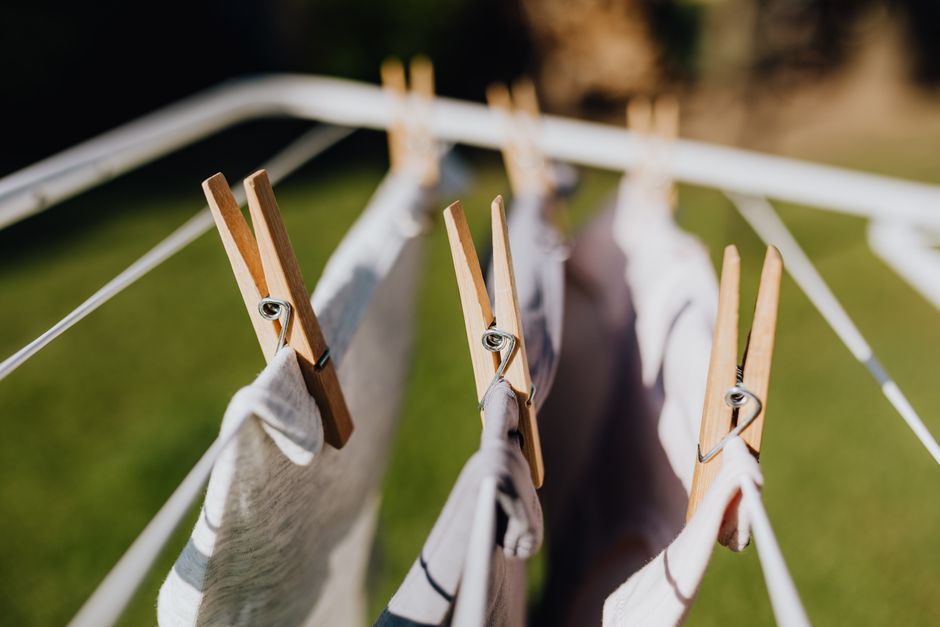
The dryer is the second energy sink and the harshest step for fabric. That lint you clear from the filter is literally your clothes wearing away, shed as fiber under high heat and tumbling. The gentlest and cheapest habit is to skip the machine when you can: a wall-mounted folding rack, a retractable line strung over the shower, or a ceiling airer turns drying into something your energy budget never notices.
When you do need a machine, the type matters more than the setting. Heat pump clothes dryers use around 70 percent less energy than conventional clothes dryers, and because they are ventless they suit tiny-home installations where cutting an exterior vent is impractical. A full-size ENERGY STAR certified electric dryer saves approximately 210 dollars in energy bills over the life of the product. Whatever you run, build two habits around it: use the moisture-sensor auto cycle instead of a fixed timer, so it stops the moment clothes are dry, and pull items out promptly so heat is not setting wrinkles into fabric that is already done.
A week of new habits in a 200-square-foot build
Picture a couple in a 24-foot trailer on solar power, with a 60-gallon fresh tank and about four loads of laundry a week. Under their old routine, they ran warm washes, started a load whenever the basket looked full enough, and dried everything on a timed cycle. The tank drained fast and the solar bank sagged by evening.
The reset takes one week. They set the washer default to cold, which removes almost all of the wash energy on its own. They batch laundry into two genuinely full loads instead of four casual ones, and run them at midday when the panels are producing. Shirts and underwear go on a retractable line above the tub. Only towels and sheets go into the heat pump dryer, timed for that same solar window. Nothing about the clothes suffers, the tank now covers the week with margin to spare, and the battery bank ends each day close to where it started.
When laundry day does not cooperate
Cold washing and air-drying occasionally throw a problem at you. Most are quick to fix once you know the cause:
- Clothes come out not quite clean in cold water. The culprit is usually detergent dose or an overdue machine, not the temperature. Measure the correct amount and run an empty hot maintenance cycle once a month to clear built-up residue.
- Whites look dingy over time. Cold cycles need help here. Use an enzyme detergent, add an oxygen booster now and then, and presoak heavily soiled items before the wash.
- Air-dried laundry feels stiff or crunchy. That points to hard water or excess detergent. Use less soap, give each piece a firm shake before hanging, or finish with ten minutes of low tumble to soften the fabric.
- The tank runs low before the week is out. Resist the urge to catch up with partial loads. Spot-clean and air out lightly worn clothes instead, and save the next full wash for after the refill.
None of these mean the new habits failed. They are the normal negotiation between how you wash and what your machine and tank can give, the same trade every tiny-home system asks you to make.
Frequently asked questions
Does washing in cold water really get clothes as clean as warm?
For everyday laundry, yes. Current detergents are built around enzymes that activate in cool water, so sweat, food, and ordinary grime come out fine. Pretreat oily or set-in stains before the cycle, and run a monthly hot cleaning cycle on the empty machine to keep it fresh. Save genuinely hot washes for sanitizing needs like bedding after an illness.
If I only change one habit, which one saves the most?
Switch your default wash to cold. Because heating water is responsible for the large majority of a washer’s energy use, moving the temperature down does more than any other single change, and it protects your clothes at the same time. It is also the easiest to make permanent, since you set it once at the machine rather than deciding load by load.
Is air-drying practical inside a small, humid home?
It is, with a little airflow management. Hang laundry near a cracked window, or run a small fan or dehumidifier while it dries, so the moisture leaves the space instead of settling into walls and fabrics. A ventless heat pump dryer makes a good backup for the days when weather or humidity makes hanging impractical, since it pulls water out of the clothes without adding much heat to the room.
Kaushik Kyada
Keep reading

Grocery Planning That Cuts Waste and Stress
A short, flexible grocery system that works for one or two, without rigid meal plans or color-coded spreadsheets.

Reusable Systems That Actually Stick
How to set up reusable bags, containers and bottles so they’re used instead of forgotten in a drawer.

Conscious Consumption Without the Guilt Trip
A grounded approach to buying less stuff, focused on quality, repair, and the rhythm of a calmer household.