
Tiny-Home Security: Locks, Cameras, and Peace of Mind
 Kaushik Kyada
August 2, 2026
8 min read
Kaushik Kyada
August 2, 2026
8 min read
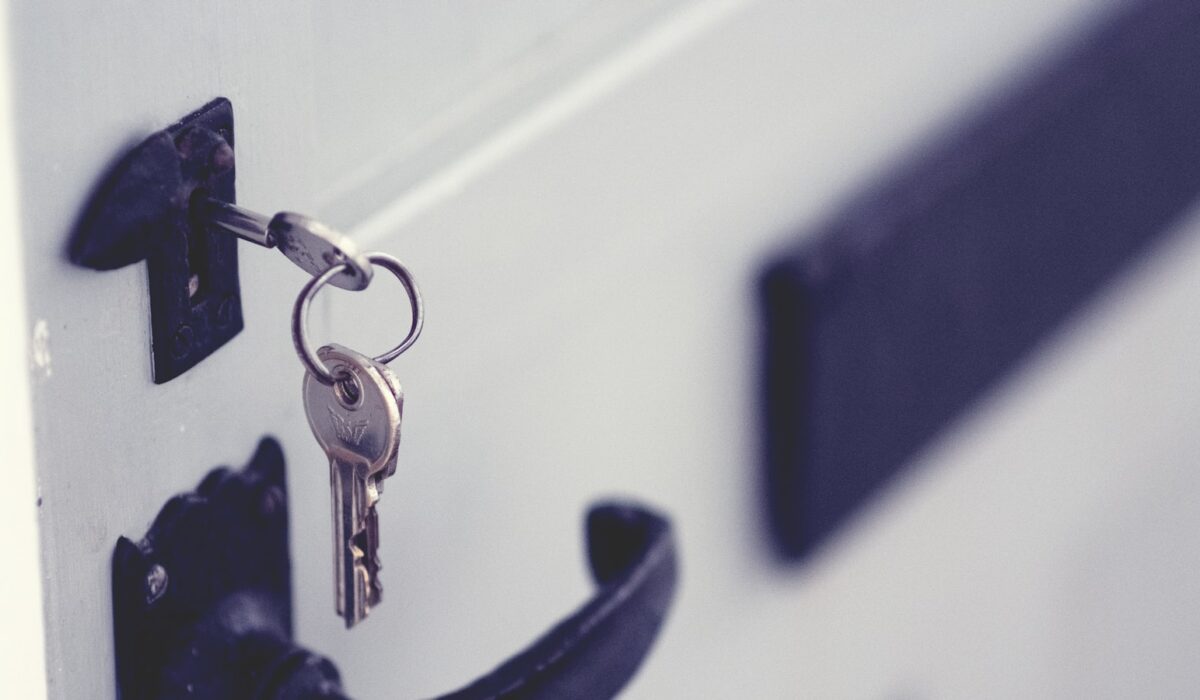
A tiny home spends its life in places a suburban house never does: a rented pad behind someone else’s property, a patch of forest, a lot that changes every few months. That mobility is the point, and it also means your security setup travels with you and cannot lean on a neighborhood full of watchful porches. Good locks, a camera or two that your power system can actually feed, and a short list of habits cover most of the real risk. This guide keeps the numbers concrete and names specific gear, so you can copy the parts that fit your setup.

Why an occupied home is the real problem
People picture a burglary as a break-in to an empty place, and they plan around hiding valuables while they are away. The data complicates that picture. Bureau of Justice Statistics figures show a household member was present during roughly 28% of household burglaries, and 7% of all household burglaries involved a violent victimization of someone who was home. In a 200-square-foot home where the sleeping loft sits a few feet above the only door, “present” and “confronted” are almost the same event. That is the case for treating security as something that protects you while you are inside, not just your possessions while you are out.
The deadbolt does most of the work
A camera records what already happened. A good deadbolt is the thing that stops it. Hardware carries a grade you can look up: the American National Standards Institute and the Builders Hardware Manufacturers Association rate residential locks from Grade 3 (basic) up to Grade 1 (highest). The Schlage Connect BE469 is certified to ANSI/BHMA A156.36 Grade 1 and runs on 4 AA alkaline batteries for up to about one year of typical use. That battery life matters when your home may sit closed up between trips and you do not want a dead lock greeting you on your return.
What Grade 1 actually buys you is resistance to force. The rating is proven by a forced-entry impact test of two hammer blows each at 60, 90, and 120 foot-pounds, so a Grade 1 deadbolt has to survive strikes up to 120 ft-lb without failing. Most break-ins are not lockpicking, they are a shoulder or a boot against the door, and the weak point is usually the strike plate, not the bolt. Two fixes cost a few dollars each: replace the short strike-plate screws with three-inch screws that reach the wall framing, and choose a lock with a one-inch throw bolt that seats deep into the jamb.

Cameras a small power system can carry
Off-grid means every watt has a home in a budget, so a camera that sips power beats one that impresses on a spec sheet. Google’s Nest Cam Outdoor, when plugged in, runs off a 7.5-watt power adapter that outputs 5V DC at 1.4A, a light and continuous DC load that a modest solar and battery bank carries without noticing. Run one at the door and one covering the approach, and you have added less draw than a couple of LED bulbs.
The harder question off-grid is what happens when the power itself drops. If your inverter faults or the bank runs low overnight, a camera that leans only on wall power goes blind at the exact moment you might want it most. The Nest Cam Outdoor answers that itself: it carries a built-in rechargeable 6 Ah, 3.65V lithium-ion battery, so it keeps watching through a grid or inverter outage and recharges when power returns. A sensible setup leans on that dual nature: keep it powered where your supply is steady, and let it fall back to its own battery where you want coverage that outlives the rest of the system.
Windows, lofts, and the opening you must never seal
It is tempting to bar or fix shut every window, especially the low, reachable ones. Resist that on any window that serves a sleeping area. Under IRC Section R310.2.1, every sleeping-room emergency escape and rescue opening must provide a net clear opening of at least 5.7 square feet (5 square feet where the opening sits at grade-floor level), and tiny-house lofts fall under Appendix AQ of the same code. That rule decides which windows can be locked down hard and which have to stay operable from the inside without a key or a tool. A loft window is your fire exit before it is a security gap. Secure it with an interior latch you can release in the dark in one motion, never a padlock and never a fixed screen.
A Tuesday-night scenario
Picture the home parked on a rural lot, you asleep in the loft, a motion alert lighting your phone at 1 a.m. because someone is standing at the door. This is where the pieces earn their place. The camera kept watching on its built-in battery even though the inverter had tripped hours earlier. The Grade 1 deadbolt is thrown, so the person at the door is testing a lock built to take 120 ft-lb, not a builder-grade unit that pops on the second kick. You are not stumbling toward a confrontation half asleep; you are watching from your phone and deciding what to do next.
The goal is not to win a fight at the door. It is to make your home a slow, loud, well-lit target, so that whoever is testing it moves on to an easier one.
From the loft you switch on the exterior lights (a smart bulb or a plain switch left within reach), speak through the camera, and if it escalates you call for help while the escape window at your shoulder stays operable. Every one of those moves depends on a choice you made calmly, weeks earlier, not on quick thinking at 1 a.m.
The habits that cost nothing
Hardware is the easy half. The cheap half is behavior, and on a small home parked among strangers it matters more than any single device:
- Throw the deadbolt every time the door closes, including when you step out for two minutes. A large share of occupied burglaries start with a door that was simply left unsecured.
- Vary the obvious tells. A single light on a timer reads as “nobody home” to anyone who watches for a few evenings.
- Keep the ground around the door clear and lit. A camera or a motion light does nothing behind an overgrown bush.
- Tell one trusted neighbor or the landowner your rough schedule, so an unfamiliar car parked at your spot gets a second look.
When it goes wrong
Security gear fails in predictable ways, and a tiny home compounds two of them. The first is a lockout: a smart deadbolt with dead batteries. The BE469’s roughly one-year battery life is generous, but cold weather drains AA cells faster, so keep the physical key on you and a spare set of batteries inside, and remember that most Schlage smart deadbolts flash a low-battery warning for weeks before they quit. The second is a camera that stops reporting. If it goes dark, check in this order: power at the source (a tripped inverter or a drained bank, not the camera itself), then the network (a solar-fed router that browned out overnight), then the device. A wired camera that went silent during an outage is usually starved, not broken.
The failure worth planning hardest against is the one that traps you. If you ever add security film, bars, or a fixed lock to a window, test that you can still get the sleeping-area escape opening released, in the dark, with cold hands, in under five seconds. If you cannot, you have built a cage, not a defense. Roll that check into the same habit as testing the smoke alarm, and redo it whenever you change the hardware.
Related guides
Frequently asked questions
Are smart locks safe for a home that sits empty between trips?
Yes, with two caveats. Choose one with a physical key backup and a genuine security grade, like the Grade 1 BE469, so a dead battery or a jammed motor never locks you out of your own home. And check the battery status before any long trip, since a lock that dies while you are away is both a lockout and, if it fails in the open position, a vulnerability. Alkaline AA cells and a one-year rating give you a wide margin, but cold weather shortens it, so plan for less in winter.
Do off-grid cameras need internet to be useful?
A camera that records to local storage has some value even with no connection, but most of what a Nest-style camera offers (alerts to your phone, live view, cloud clips) depends on a network. On an off-grid lot that usually means a cellular router or a satellite link, both of which draw their own power. If you cannot keep a connection up during an outage, rely on a battery camera that stores clips on the device plus a loud, visible deterrent, and treat the smart alerts as a bonus rather than the whole plan.
Is a camera or a better lock the higher priority on a tight budget?
The lock, without much doubt. A camera documents an entry; a Grade 1 deadbolt with long strike-plate screws often prevents one, and prevention is the whole point when you may be asleep a few feet away. Spend first on the door hardware and the frame it anchors to, add motion lighting next, and treat cameras as the layer you build once the physical barrier is solid.
Kaushik Kyada
Keep reading
Communicating During Outages, Calmly
How to stay informed, reach loved ones, and avoid panic during a power outage, using simple, reliable tools.
Emergency Lighting That Actually Works
How to set up reliable lighting for power outages, without elaborate generators or wasted batteries.

Rainwater Catchment Basics for Small Homes
A grounded primer on collecting, storing and using rainwater at a tiny-home scale, without the overwhelming homestead apparatus.