
Tools and Hardware: A Small Home Workshop
 Kaushik Kyada
June 26, 2026
8 min read
Kaushik Kyada
June 26, 2026
8 min read

The gap between a home you can fix yourself and one you call someone about is smaller than it looks. It is roughly eighteen tools, one clear divided drawer for the loose parts that otherwise scatter into every junk pile in the house, and a defined place to stand while you use them. A tiny home cannot give up a garage bay for a shop, and it does not need to. What it needs is a corner that carries its weight: tools within arm’s reach, a surface at a height that does not punish your back, and enough light and power that the work stops fighting you.
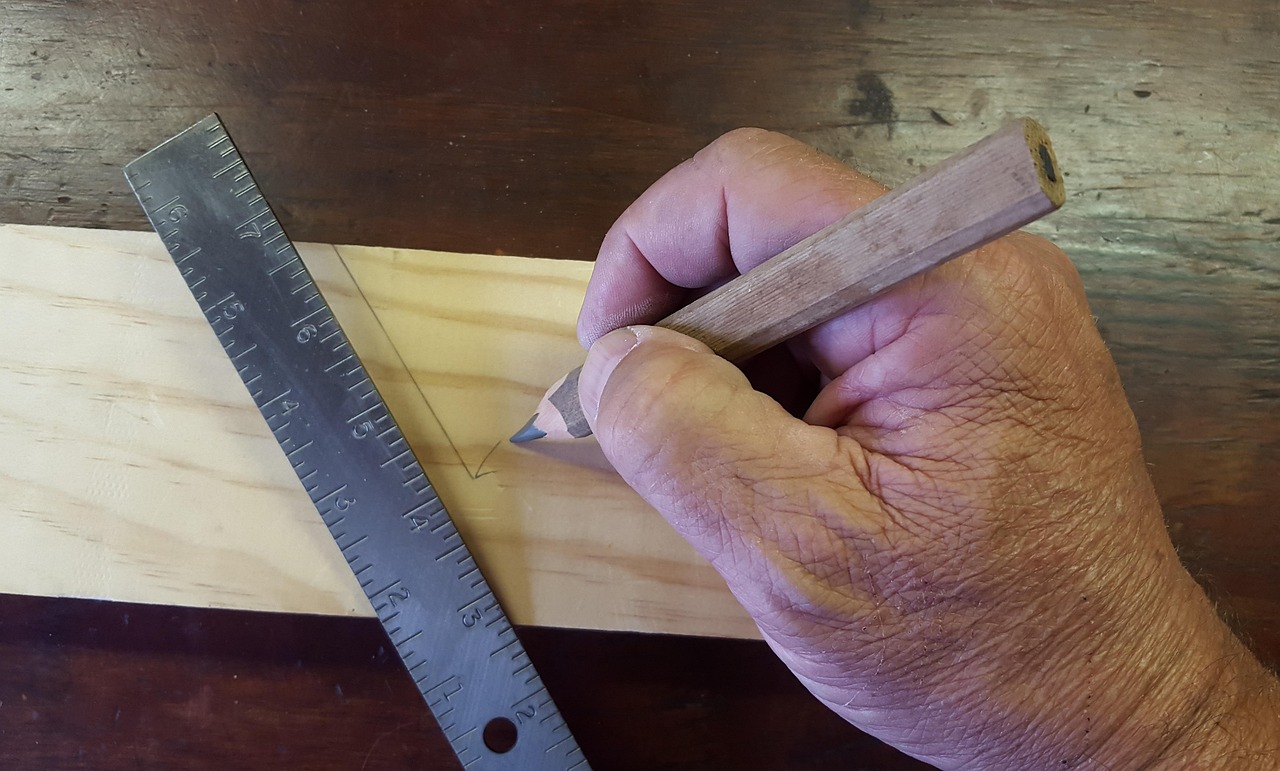
The eighteen tools worth the drawer
Most home repairs in a small space are fastening, cutting, measuring, and gripping. A tight kit covers all four without redundancy. If you buy these once and buy them decently, you will not shop again for years:
- Fastening: a 16 oz claw hammer, a cordless drill and driver with its charger, a bit set (Phillips, slotted, Torx, square, and hex), and a 4-in-1 screwdriver for the jobs too small to bother charging a drill.
- Gripping and turning: an 8-inch adjustable wrench, slip-joint pliers, needle-nose pliers, locking pliers, and a folding hex-key set.
- Cutting: a utility knife with spare blades, a compact pull saw, and a wire stripper and cutter.
- Measuring and locating: a 25-foot tape measure, a 9-inch torpedo level, a combination square, a stud finder, and a non-contact voltage tester.
That is eighteen. The clear drawer matters as much as the tools: one divided organizer with a transparent lid, with compartments for screws, wall anchors, picture hooks, nails, and spare bits. When you can see the last three anchors through the lid, you restock before you strip a wall improvising with the wrong one.
Bench height decides whether you ever use it
A surface you have to hunch over gets used once and then becomes a shelf for mail. The standard all-around workbench height for general woodworking is 34-36 inches, sitting in the middle of a broader practical range of roughly 30 to 39 inches, with lower benches favoring hand-tool work and taller ones favoring fine detail and assembly. To find your own number, stand relaxed with your arms hanging and measure from the floor to the crease of your wrist. Build the top near there and you can lean into a task without stooping.
In a tiny home the bench should disappear when idle. A butcher-block slab on fold-down brackets gives a solid surface that drops flat to the wall, and a hardwood counter offcut works just as well. Set the mounted height once, using the measurement above, and stop treating the bench as furniture you design around.
A workshop is not a room. It is a surface at the right height, a wall you can reach without moving your feet, and enough light to see the mistake before you commit to it.
Put the tools on the wall, on a one-inch grid
Loose tools in a drawer become a tangle you dig through; tools on a wall are chosen in one glance. Pegboard is still the cheapest way to do it, and it is more precise than it looks. Standard commercial pegboard uses a universal 1 inch on-center spacing; 1/4-inch heavy-duty holes, which means the distance from one hole’s center to the next is exactly one inch, and the board comes in either a 1/8-inch light-duty diameter or a 1/4-inch heavy-duty one. For anything beyond a screwdriver, buy the 1/4-inch board so the hooks do not tear out under a hung drill.
Mount the board on furring strips or nylon spacers so the hooks have room to seat behind the panel, and screw it into studs, not just drywall. Because the grid is a known one-inch step, you can plan the layout on graph paper before you drill: trace each tool and leave a hole of clearance around it so you can lift it off without knocking down its neighbor.
Power, light, and clean air for the corner
If your shop corner lives in a garage, the electrical floor is already set for you. In a dwelling-unit garage (attached, or detached with power), NEC Section 210.11(C)(4) requires at least one dedicated 20 amperes (120-volt) branch circuit to supply the required receptacle outlets, a jump from the 15-amp minimum the 2014 code allowed. That headroom matters the moment you run a drill charger, a shop vacuum, and a space heater at once, which is what a cold-weather repair session looks like.
Light is the upgrade people skip and then blame their eyes for. For a workshop, recommended task lighting runs about 30 to 50 foot-candles for general work and 50-100 foot-candles for fine-detail work such as precision woodworking or assembly. A single overhead bulb will not get you there. Hang a linked LED shop fixture over the bench, add a clamp light for close work, and the gain in accuracy is immediate.
Air is the part nobody sees until it is a problem. Sanding and sawing throw fine wood dust that hangs in a small room long after you stop. OSHA’s permissible exposure limit for Particulates Not Otherwise Regulated, the category that covers wood dust, is 15 mg/m3 total dust (8-hr TWA); 5 mg/m3 respirable. You will not meter your closet, but the numbers set the direction: connect the shop vacuum to the sander, crack a window, and wear a fitted N95 for anything that makes a cloud.
A worked example: the hall closet that became a shop
Picture a standard hall closet, 30 inches wide and 24 inches deep, holding a vacuum and coats you never wear. Clear it out. Mount a butcher-block slab across the full 30-inch width on fold-down brackets, set so the top lands at 35 inches for a person of average height. Cover the back wall with a 24-inch by 24-inch panel of 1/4-inch pegboard on the one-inch grid, screwed to the studs behind it, and hang the eighteen tools by category so fastening lives on the left and cutting on the right.
Overhead, swap the closet’s single bulb for a 4-foot LED shop light rated to put roughly 60 to 80 foot-candles on the bench, and clip a small task lamp to the shelf edge for detail work. Plug a slim power strip into the nearest 20-amp receptacle and park a 2.5-gallon shop vacuum beneath the bench. The build costs a weekend and less than a single furniture piece, and it folds shut behind the closet door: 30 inches of wall doing the work of a garage.
When something goes wrong
Small shops fail in predictable ways, and each has a fix that is faster than panicking:
- The breaker trips mid-cut. You stacked too many motors on one circuit. Move the space heater or the charger to a different circuit rather than resetting and hoping; the breaker is doing its job.
- A screw head strips out. Stop driving immediately. Back it out with locking pliers on the head, or press a rubber band into the stripped slot to give the bit grip, and switch to the correct bit size next time.
- A wall anchor spins and pulls free. The hole is now oversized. Move over to a stud, or step up to a toggle bolt rated for the real load rather than forcing a bigger version of the anchor that already failed.
- The blade tears instead of cutting. It is dull, and dull tools need force, which is what slips. Swap in a fresh utility blade or a sharp saw.
Keep one thing in the corner that is not a tool: a fire extinguisher rated for ordinary combustibles and small electrical work. On a fire extinguisher label, each unit of the Class A rating number represents firefighting capability equal to 1.25 gallons of water per Class A unit, so a 2-A extinguisher performs like about 2.5 gallons of applied water on wood and paper. A compact A-B-C unit mounted where you can grab it without reaching over the bench is the cheapest insurance a shop corner buys.
Frequently asked questions
How small can a workshop corner realistically be?
About 30 inches of usable wall width is enough for a real one, which is why a hall closet or the end of a mudroom works so well. What limits a small shop is rarely floor area; it is height and reach. As long as the bench top lands near your wrist height and every tool sits within one arm’s sweep, a narrow footprint outperforms a cluttered garage, because you never lose time walking or searching.
Do I need the dedicated 20-amp circuit if my shop is indoors, not in a garage?
The NEC 20-amp requirement is written specifically for dwelling-unit garages, so an indoor closet shop is not held to it. The practical concern still applies. Add up the current draw of everything you might run together, since a drill charger, a shop vacuum, and a heater on one 15-amp circuit will trip it. If you cannot spread the load across circuits, run the high-draw tools one at a time.
What is the one tool people leave out and later regret?
The non-contact voltage tester. It costs little, fits in the drawer, and is the difference between working near a switch with confidence and guessing. Before you touch any wiring, you hold it to the conductor and it tells you whether the circuit is live. A stud finder runs a close second, but the voltage tester is the one that protects you rather than the wall.
Kaushik Kyada
Keep reading

Cable Management for Sane People
A modest, no-perfectionism approach to taming the cables, chargers, and adapters that quietly clutter every small home.

Vertical Storage Thinking for People Who Hate Clutter
How to use walls, doors, and the air above your countertop, without making the home feel like a hardware aisle.

Closet Organization for Half a Closet
How to make a tiny closet hold everything a person actually wears, with no folding crisis and no daily decisions.